

What Is a Dental Crown?
A dental crown is a custom-made restoration that completely covers the visible portion of a damaged or weakened tooth. Sometimes called a dental cap, a crown helps protect the remaining tooth structure while restoring its shape, strength, function, and appearance.
A dental crown may be recommended to:
– Protect a cracked or weakened tooth
– Restore a broken or severely worn tooth
– Repair a tooth with a large filling
– Strengthen a tooth following root canal treatment
– Improve the shape or appearance of a tooth
– Restore a dental implant
Dental crowns can be made from several materials, including zirconia and porcelain. We’ll recommend a material based on the location of the tooth, your individual needs, and your treatment goals.
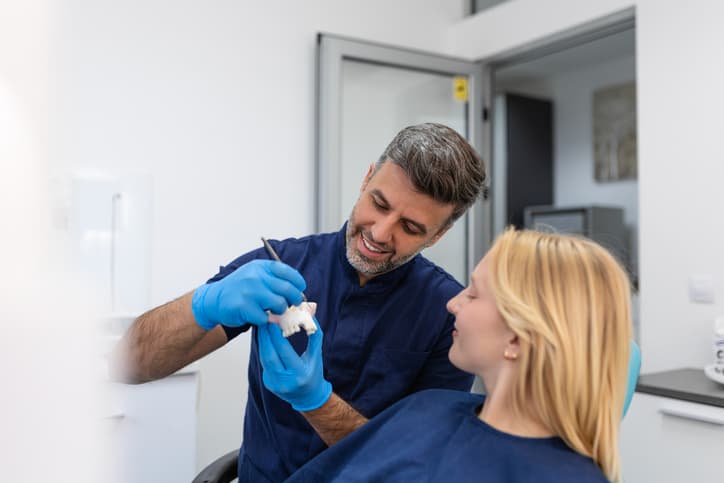
What Is a Dental Bridge?
A dental bridge is a fixed restoration used to replace one or more missing teeth. A traditional bridge consists of an artificial replacement tooth supported by crowns placed on the neighbouring teeth, effectively “bridging” the space left by the missing tooth.
Unlike a removable denture, a dental bridge is permanently secured in place. Replacing a missing tooth can help restore your ability to chew, improve the appearance of your smile, and prevent neighbouring teeth from shifting into the open space.
Dental bridges aren’t the only option for replacing missing teeth. Depending on your oral health and individual needs, a dental implant or another tooth replacement option may also be considered.
Dental Crowns & Bridges Frequently Asked Questions
What is the difference between a dental crown and a dental bridge?
A dental crown covers and protects an existing tooth, while a dental bridge is used to replace one or more missing teeth. Traditional bridges typically use crowns on neighbouring teeth to support an artificial replacement tooth between them.
How long do dental crowns last?
The lifespan of a dental crown varies depending on the crown material, its location, your oral hygiene, and habits such as teeth grinding or clenching. With proper care and regular dental visits, crowns can provide many years of function before they may need to be replaced.
How long does a dental bridge last?
Dental bridges can last for many years with proper oral hygiene and routine dental care. Their lifespan depends on factors such as the health of the supporting teeth, your bite, oral hygiene habits, and how well the area beneath the bridge is maintained.
Do I need a crown after a root canal?
A crown is often recommended after getting a root canal, particularly for back teeth that experience significant chewing forces. The crown helps protect and strengthen the remaining tooth structure. Whether you need one will depend on the location and condition of the treated tooth.
What is the difference between a dental bridge and a dental implant?
A dental bridge replaces a missing tooth by using neighbouring teeth for support, while a dental implant replaces the missing tooth using an implant placed in the jawbone. The best option depends on factors such as your oral health, bone support, neighbouring teeth, treatment goals, and budget.
Can you get a dental bridge for one missing tooth?
Yes. A traditional dental bridge can be used to replace a single missing tooth by placing an artificial tooth in the gap and supporting it with crowns on the neighbouring teeth. Other options, including a dental implant, may also be appropriate depending on your needs.
How do I clean under a dental bridge?
Because a dental bridge is fixed in place, you’ll need to clean underneath the replacement tooth as well as around the supporting teeth. Floss threaders, interdental brushes, or other recommended cleaning aids can help remove plaque and food from areas a regular toothbrush cannot reach.
Are dental crowns and bridges covered by insurance?
Many dental insurance plans provide some coverage for crowns and bridges when they are considered necessary to restore dental health or function. Coverage, deductibles, frequency limitations, and reimbursement amounts vary by plan, so it’s important to confirm your individual benefits before treatment.
Is it painful to get a dental crown?
Getting a dental crown should not be painful because the treatment area is numbed with local anesthetic during the procedure. Some patients experience mild sensitivity or gum tenderness afterward, but this typically improves as the area settles. Let us know if you experience persistent or worsening discomfort.
Can I eat normally with a dental crown?
Yes. Once your permanent crown is in place and you’ve adjusted to it, you should be able to eat normally. It’s still a good idea to avoid chewing extremely hard or sticky foods that could damage your crown, and you’ll receive specific instructions for eating while wearing a temporary crown.
How long does it take a dentist to fit a crown?
Getting a dental crown typically requires two appointments when the restoration is made by a dental laboratory. During the first visit, the tooth is prepared and impressions or digital scans are taken, and a temporary crown may be placed. At the second appointment, the permanent crown is checked for fit, appearance, and bite before being securely cemented in place.
How painful is getting a dental bridge?
Getting a dental bridge should not be painful because local anesthetic is used to numb the treatment area. You may experience some temporary sensitivity or tenderness after the procedure as your teeth and gums adjust, but ongoing or significant pain should be assessed by your dentist.
Do teeth decay under a dental bridge?
Yes, the natural teeth supporting a dental bridge can still develop tooth decay, particularly around the edges of the crowns. Brushing, flossing, and cleaning underneath the bridge every day are important for removing plaque and protecting the supporting teeth and gums.
Why Choose Legacy Dental for Crowns & Bridges?
Restoring a damaged or missing tooth requires a solution that supports both the function and appearance of your smile. At Legacy Dental, we’ll carefully assess your teeth, bite, and oral health before recommending a crown, bridge, or alternative treatment.
Our South Edmonton dental team provides comprehensive restorative care under one roof, allowing us to consider your long-term oral health as part of your treatment plan. We’ll explain your options and help you choose a restoration designed to look natural, function comfortably, and meet your individual needs.













URGENT CARE
Dental issue that can’t wait?
Mon–Fri, 8:00am–5:00pm · Existing patients only.